
The Future of the Automated Mobility Industry – An Update
It has been six years since I co-authored a working paper with Prof. Robert A. Burgelman at the Stanford Graduate School of Business on the future of the automated mobility industry.
A lot has happened since then.
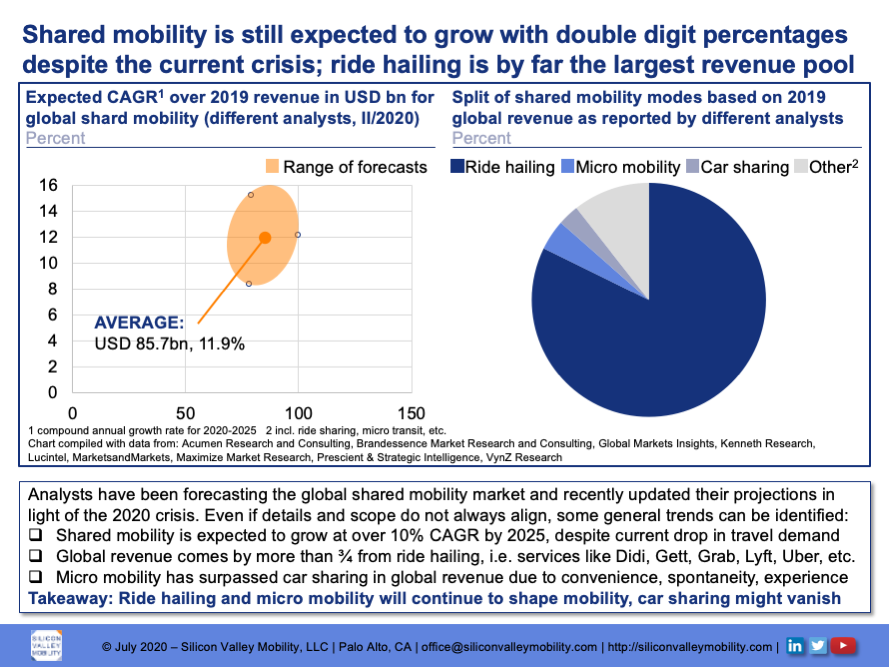
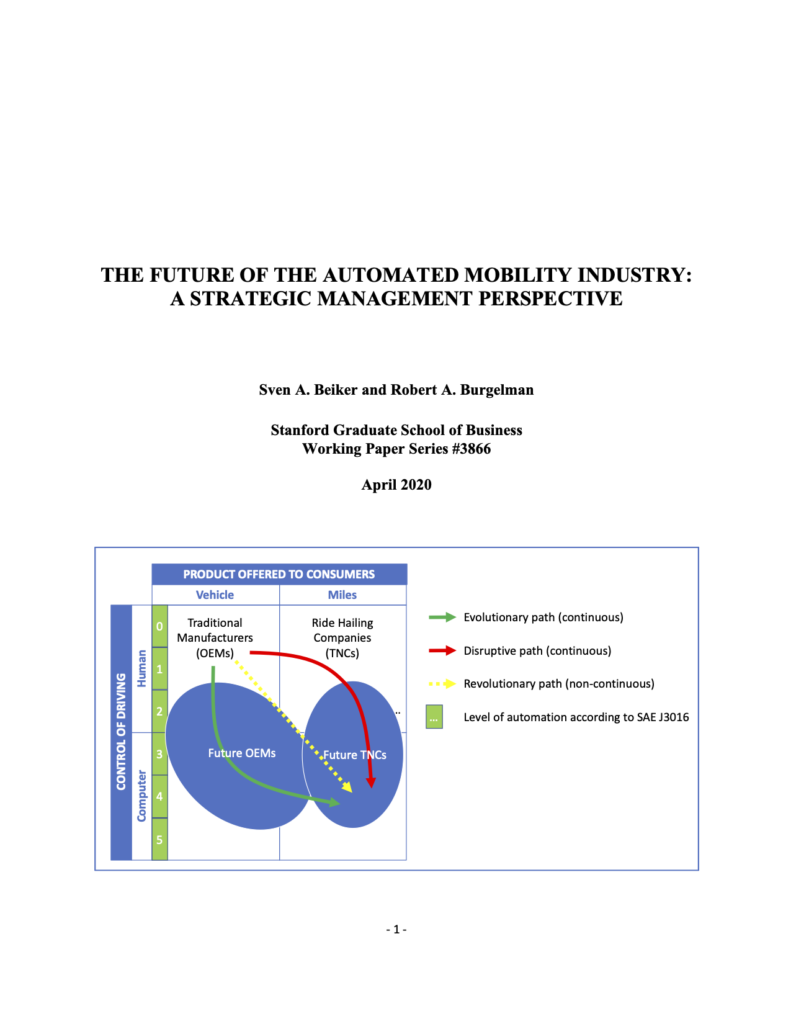
In 2020, when we published The Future of the Automated Mobility Industry: A Strategic Management Perspective, automated driving was still largely a promise. The industry was debating the timing of autonomy, the role of traditional automakers versus technology companies, and the potential impact of shared automated mobility.
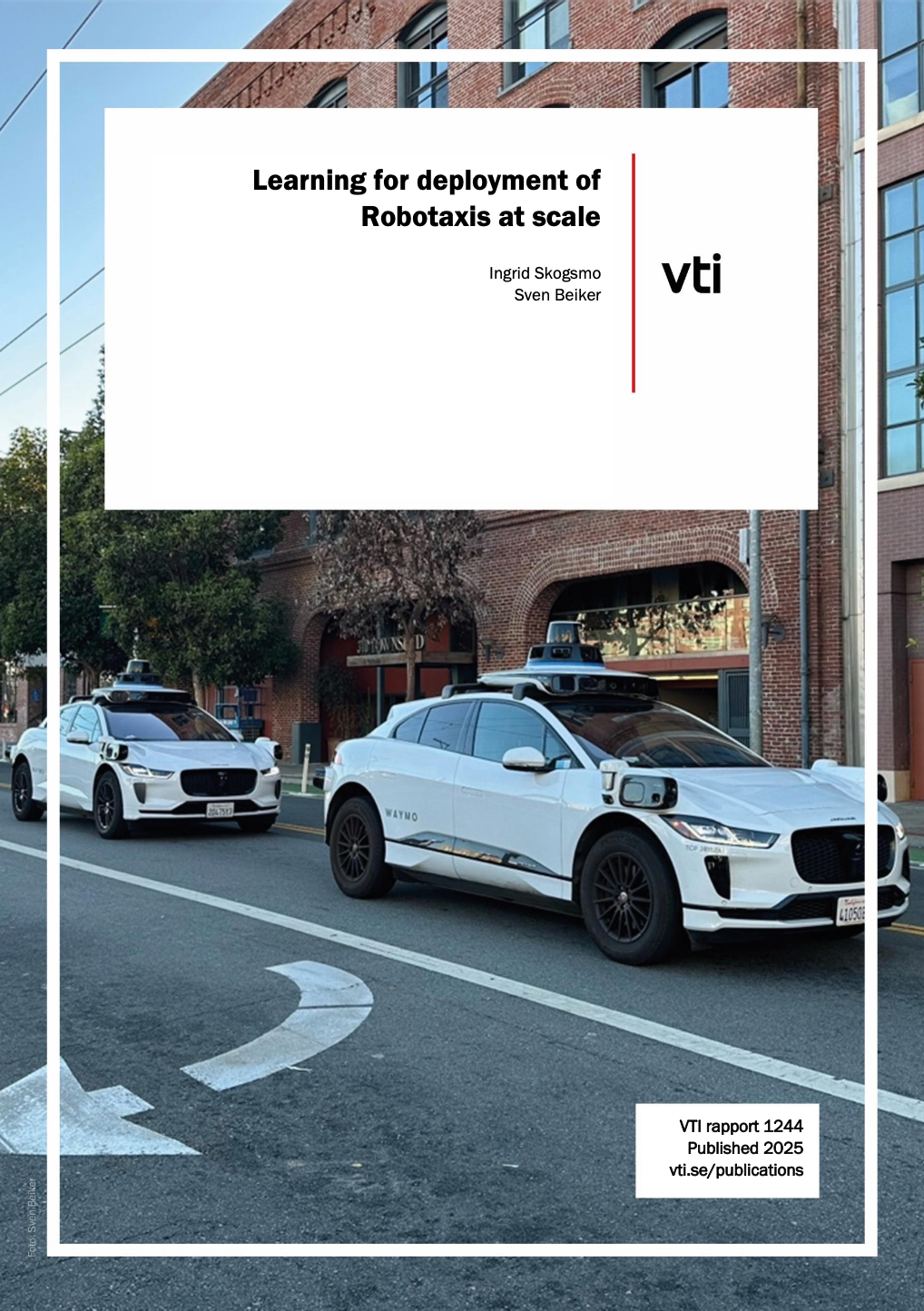
Today, we are seeing some of those ideas play out in the real world. Robotaxis are operating commercially, automated driving technology has made significant progress, and the competitive landscape has become much more diverse. At the same time, some developments have taken considerably longer than many expected.
This made it a good time to revisit our analysis.
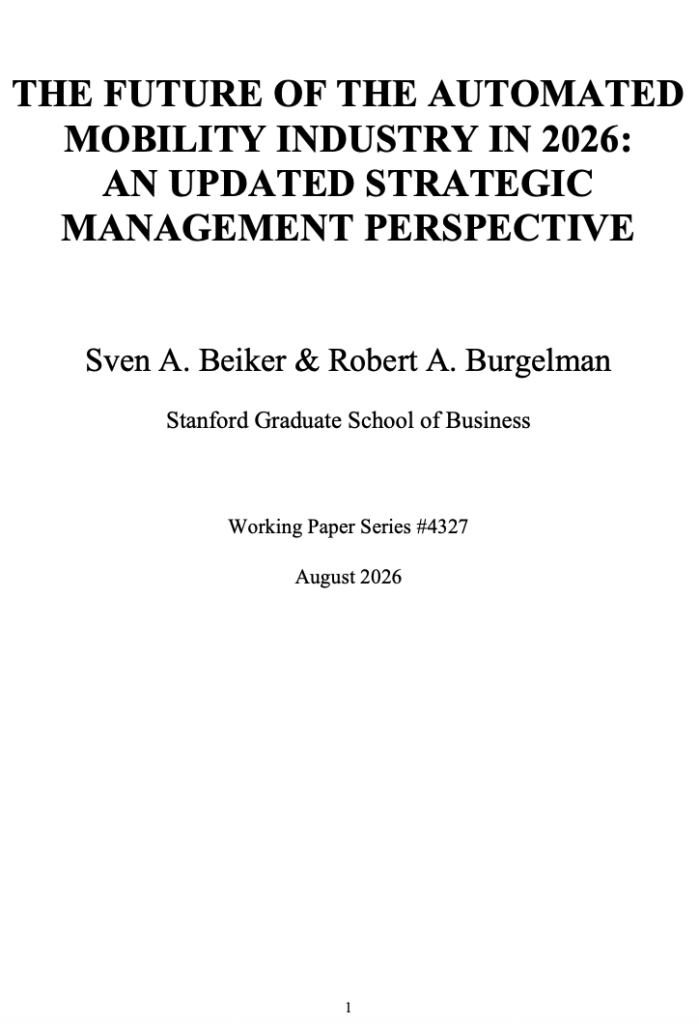
I am therefore very pleased to share an updated version of our paper, again co-authored with Robert:
“The Future of the Automated Mobility Industry in 2026: An Updated Strategic Management Perspective.”
The paper looks at the industry from a strategic management perspective and asks some of the questions that I find particularly interesting:
– Who is best positioned to succeed in an industry that is changing at different speeds?
– How do established automotive companies compare with technology companies, ADAS suppliers, startups, and other new entrants?
– And perhaps most importantly: how does the rate of change affect the strategic options of incumbents and newcomers?
One thing I find fascinating when looking back at our 2020 work is that some of the fundamental strategic questions have remained remarkably persistent, while the context around them has changed considerably.